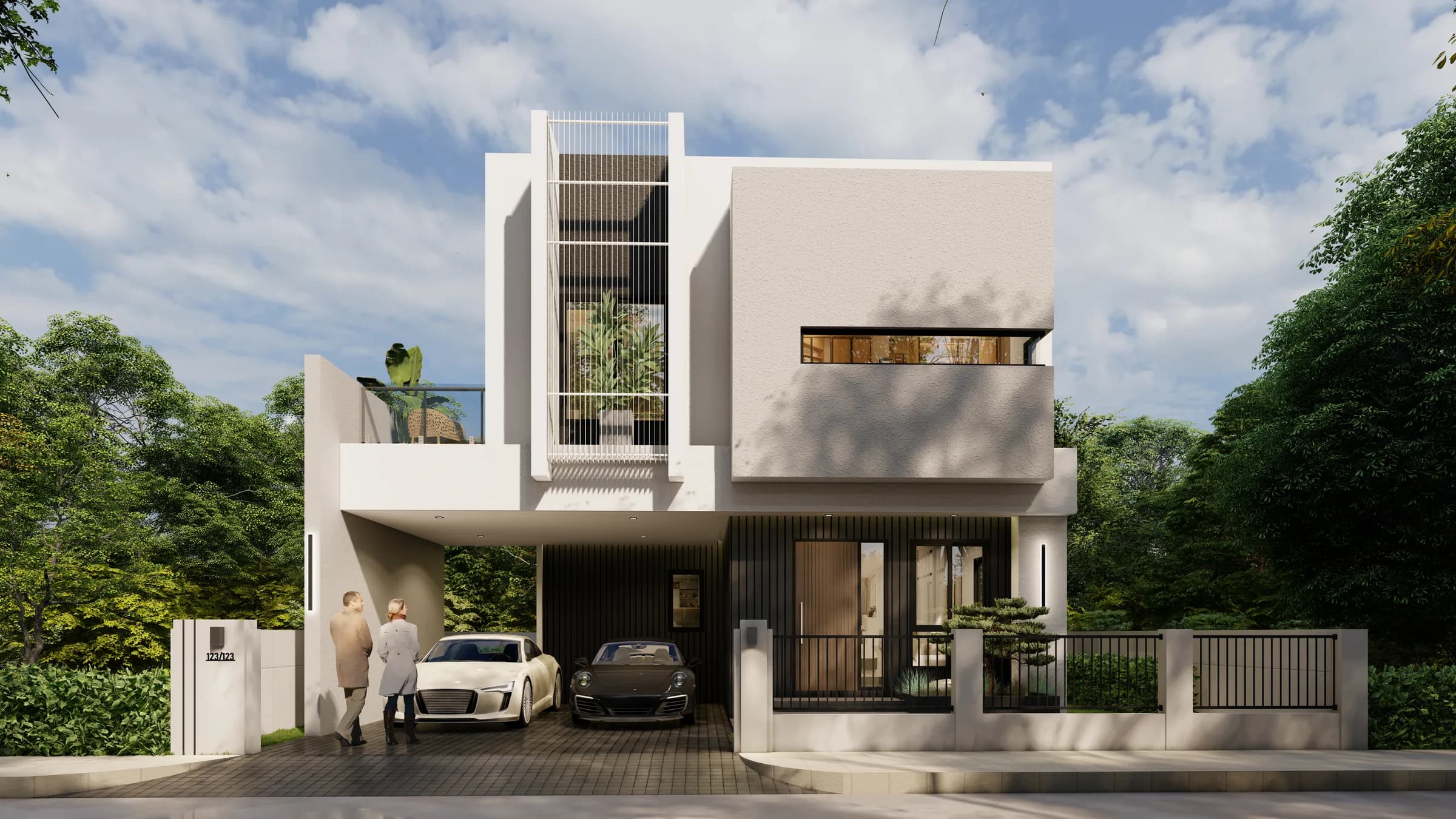
To retire in Chiang Mai with fewer surprises, start with a practical living plan—not a property listing.
First confirm a lawful long-stay route. Then compare areas by healthcare access, transport, daily errands and the home features you will need over time. Rent or stay temporarily while testing those routines before making a long commitment.
A quiet address is only a good retirement location if it still works on an ordinary clinic day, during poor air quality or heavy rain, and when family members visit.
Start with four decisions: lawful immigration status, a lawful housing arrangement, healthcare readiness and a workable daily routine. Immigration permission does not itself create property ownership rights, while owning or renting a home does not itself grant permission to stay. Check each decision separately before paying a deposit or moving funds.
What this guide covers—and what requires professional advice
This guide helps you build an area and housing shortlist. It explains official visa categories at a high level, flags foreign-ownership limits, and gives practical questions for healthcare and daily life. It cannot determine eligibility or whether a legal, tax, insurance or medical choice suits you.
This is general planning information, not immigration, legal, tax, financial or medical advice. Rules vary by category, nationality, application location and individual facts. Before paying a deposit or moving funds, check the current rule with the responsible Thai authority, obtain advice from properly qualified professionals, and confirm property availability, specifications and terms when you enquire.
Source check: The authority pages and official documents cited below were checked on 3 September 2026. Immigration, property-law and healthcare details can change, so confirm the current position with the responsible authority and an appropriately qualified adviser before acting.
Visa planning: confirm your route before choosing a home
Thailand has several routes commonly discussed in retirement planning, but “retirement visa” is not one universal permit.
The table below is non-exhaustive. It only identifies official routes for further investigation. Read the category, place of application, permission to stay, reporting duties and extension process together.
| Route to investigate | What the official source says at a high level | What to verify for your case |
|---|---|---|
| Non-Immigrant O for retirement purposes | An Immigration Bureau document covers an in-country application for, or change to, Non-Immigrant O status for retirement purposes for applicants aged 50 or over. That document concerns a specific 90-day procedure; it is not a universal checklist for every Non-O application or extension. | The correct procedure for your current status and location; eligibility; current financial evidence; timing; permission-to-stay date; extension and re-entry requirements. |
| Non-Immigrant O-A (Long Stay) | The Department of Consular Affairs describes O-A for applicants aged 50 or over who intend to stay without working. Its current page lists financial, criminal-record, medical and health-cover evidence and states that admission may permit a stay of up to one year. | Whether you must apply from your country of nationality/residence; current policy wording and minimum cover; document authentication; reporting; extension; re-entry. |
| Long-Term Resident (LTR): Wealthy Pensioner | The Board of Investment’s official LTR programme includes a Wealthy Pensioner category for applicants aged 50 or over. Its published criteria distinguish unearned or passive income from salary and include financial and health-cover qualification routes. | Current income definitions and evidence; any investment alternative; insurance, Thai social-security or bank-deposit evidence; endorsement, issuance and maintenance conditions. |
The Department of Consular Affairs’ O-A page shows an update date of 23 December 2025. When checked on 3 September 2026, it listed age 50 or over, a non-working purpose, specified financial and supporting evidence, and health cover totalling at least THB 3 million among its O-A conditions.
Non-Immigrant O-X is another route some applicants research. Because the responsible authority's detailed page was unavailable during the 3 September source check, this guide does not reproduce its eligibility criteria. Obtain the current official checklist from the Thai mission responsible for your application rather than relying on an older third-party summary.
The Board of Investment publishes the separate LTR Wealthy Pensioner route and its current qualification criteria. Do not use any table entry or threshold as a personal eligibility conclusion.
Check Thai e-Visa and the Thai mission responsible for your legal residence. Confirm in-country procedures with Immigration.
The Immigration Bureau’s TM.47 form is the form for notifying a stay longer than 90 days. The form expressly says that the notification is not an extension of stay. Confirm the current reporting method and deadline that apply to you; track reporting, permission to stay and re-entry separately, and keep the official receipt.
Property ownership: separate the building from the land
Immigration permission does not itself give a foreign national a right to own land. Thailand’s Department of Lands maintains separate guidance for foreign condominium ownership, the limited Section 96 bis process, inheritance, Thai spouses of foreigners and anti-nominee controls.
The legal result depends on the asset and transaction. Retirement status alone does not decide it.
Foreign ownership of land is generally restricted. The Department of Lands publishes a specific Section 96 bis residential-land process, but its existence is not evidence that a person or transaction qualifies.
The Department of Lands also publishes separate rules and procedures for foreign ownership of condominium units. Eligibility, evidence of funds, the condominium’s foreign-ownership position and the exact registration documents must be checked for the transaction. A building, a condominium unit and the land beneath a house are legally distinct interests; do not assume that control of one includes ownership of another.
Ask an independent Thai property lawyer to review the exact title and documents before considering a purchase, lease, usufruct, superficies, company involvement or family arrangement. Do not use a person or company as a nominee to conceal foreign ownership.
The Department of Lands publishes anti-nominee measures and a foreign property information hub.
A property due-diligence file should answer, in writing:
- What exactly is being transferred or granted: land, building, condominium unit, lease or another registered right?
- Whose name will appear on the title or registration, and what legal basis permits it?
- What mortgages, servitudes, restrictions or disputes affect use?
- What happens on sale, death, incapacity or early termination?
- Which fees, common charges, repairs and insurance obligations apply?
- What documents does the relevant Land Office require?
Do not sign because a structure is called “standard for foreigners.” Your independent lawyer should explain both the right received and its limits.
Compare retirement priorities before choosing an area
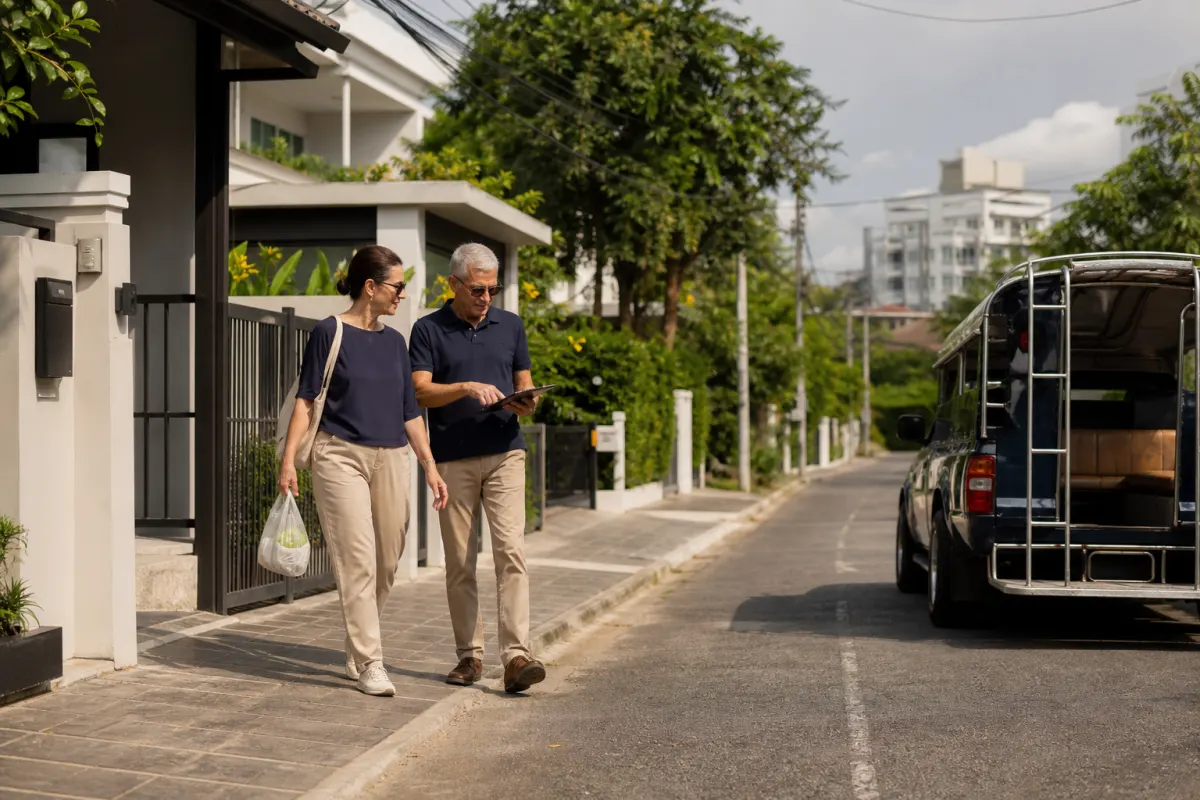
There is no single best Chiang Mai retirement area. Central neighbourhoods and outer residential areas offer different balances of access, space, traffic and car dependence. Compare how each address supports your actual week.
| Priority | Questions to test in the city | Questions to test in an outer residential area |
|---|---|---|
| Healthcare | Can you reach your chosen general and specialist providers using a route you can manage? What happens if parking or pickup is difficult? | Is there a suitable first point of care nearby? Which larger hospital would receive a referral, and how would you travel there? |
| Daily errands | Are groceries, pharmacy, banking and social activities genuinely accessible to you, not merely close on a map? | Can routine errands be combined? Is delivery available, and will you still drive in five or ten years? |
| Transport | Can you manage crossings, pavements, pickup points and evening travel? | Is a car effectively necessary? Who is the backup driver when you are unwell or away? |
| Quiet and air | Is the home affected by road, aircraft, construction or nightlife noise at the hours you rest? | Are agricultural activity, local roads or vacant plots likely to affect noise, dust or access? |
| Family visits | Is there practical guest space and a workable route from the airport or station? | Will visitors be comfortable without their own vehicle, and can short stays be managed without disrupting the household? |
| Test routes when you would actually use them. Advertised travel times cannot account for congestion, rain, works, parking or your exact start point. Repeat the journey to your hospital, pharmacy, supermarket and social activity on different days. If Hang Dong is on your shortlist, use this guide to living in Hang Dong as a question prompt, then verify the exact address in person. |
Air quality in Chiang Mai varies by date and monitoring location. Check the Pollution Control Department’s Air4Thai service for the station, timestamp, AQI and pollutant reading relevant to your location. A current reading is not a forecast or personal medical assessment; discuss exposure precautions with a qualified clinician, especially if you have an existing respiratory or cardiovascular condition.
Trial stays in only one season are incomplete. The English hotel listings can provide a temporary base; confirm rates and availability directly.
Housing checklist for a long-term home
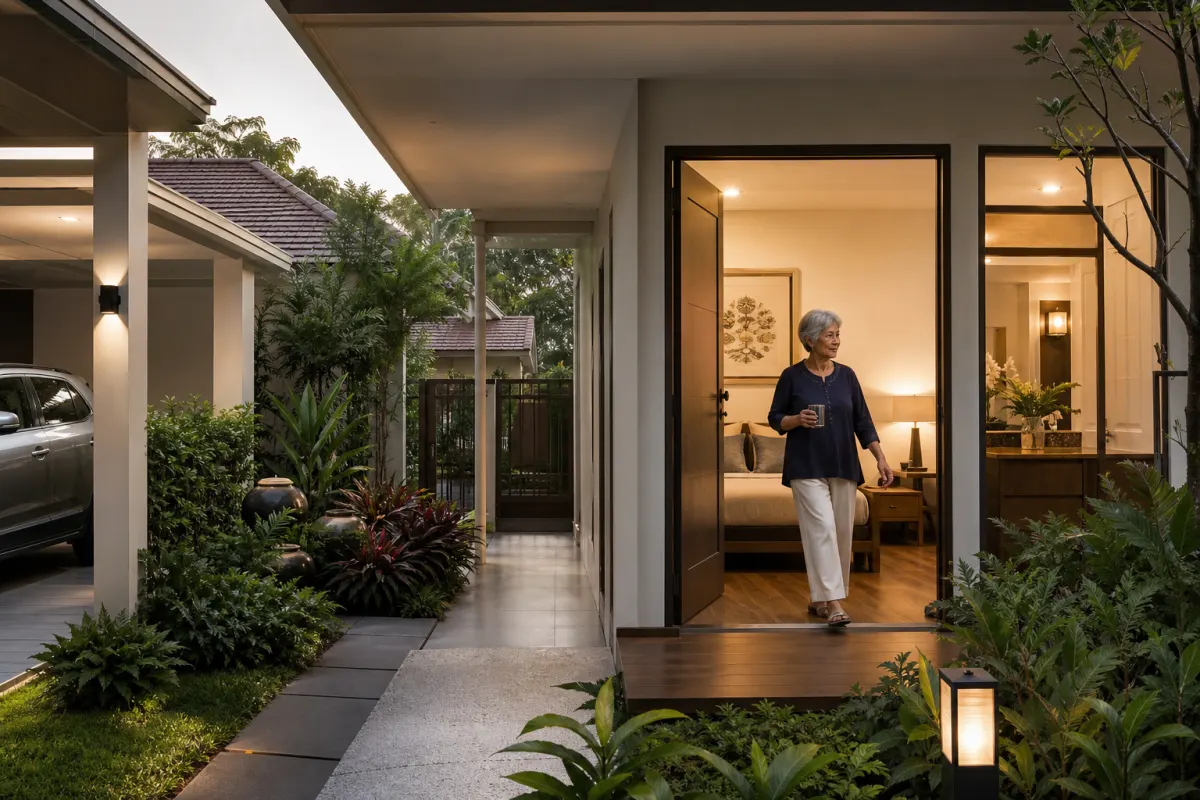
A retirement home should work now and remain adaptable if mobility or household needs change. No feature guarantees safety or medical suitability.
Access and movement
- Check the full path from parking or drop-off to the main living area, including steps, slopes, thresholds, lighting and surfaces when wet.
- Decide whether an entry-level bedroom and full bathroom are essential. A future lift requires professional assessment of space, structure, power and maintenance.
- Walk through doors and around furniture; consider any mobility aid you use. Have load-bearing rails or bars designed and checked professionally.
Bathroom, kitchen and utilities
- Inspect shower entry, drainage, floor grip, lighting, reachable storage and space for assistance if ever needed.
- Check whether worktops, appliances and storage are reachable.
- Locate the electrical panel, water shut-offs and hot-water equipment. Test water and drainage with permission and request maintenance records for an existing home.
Maintenance, security and resilience
- List every recurring task: garden, pool, roof, air-conditioning, pest control, common areas and waste collection. Confirm responsibility and access arrangements in writing.
- Ask how visitors, caregivers and emergency responders enter; inspect exterior lighting and the route after dark.
- Have an appropriate inspector review drainage and past water entry. Do not infer flood performance from one dry-season visit.
- Test internet and mobile service inside the home if needed for telehealth or security.
Space and household change
- Plan for guests without making the home burdensome to maintain all year.
- Consider future caregiver space and privacy. Confirm pet, alteration and common-fee rules from current documents.
- Request the approved plan, specifications, warranties and handover process for the exact property.
Browse Chiang Mai housing options in English to compare formats and locations, and use the Chiang Mai home-buying guide to organise your questions. Koolpunt Ville 9 is a starting point for enquiries, not confirmation of availability, suitability, specifications or features.
Healthcare planning: build a system, not a hospital list
Plan routine, specialist and emergency care separately. A hospital name does not establish insurance acceptance, specialist availability, language support or the right emergency destination.
Identify a routine provider, facilities for your existing specialist needs and a 24-hour emergency plan. The Ministry of Public Health facility directory and GIS Health can help identify registered facilities and locations, but a directory entry does not confirm current services. Verify hours, specialties, language support, emergency capability, contacts and insurance arrangements directly with each provider and insurer.
For a medical emergency, Chiang Mai University’s official EMS page directs people outside the Faculty of Medicine area to the Chiang Mai Emergency Medical Command Center at 1669. This instruction was visible when checked on 3 September 2026. Save the number as part of your emergency plan and confirm your address can be communicated clearly.
Dispatch and clinical decisions depend on the situation. A preferred route or hospital is not guaranteed.
Keep an emergency sheet with your address, contacts, allergies, medicines, diagnoses and insurer number, in English and Thai if useful. Ask a clinician what you should carry.
For insurance, obtain written answers on limits, pre-existing conditions, exclusions, direct billing, evacuation, renewability and current network hospitals. Visa-compliant cover is not automatically adequate personal cover. No policy or cost is recommended here.
Lifestyle planning: rehearse an ordinary month
Test the repeatable routines that shape independence, not a holiday itinerary.
Use a trial stay to rehearse:
- a weekday grocery and pharmacy trip;
- a morning medical appointment and the return journey;
- transport after dark and during rain;
- a day when you do not drive;
- banking, mobile service and a delivery;
- one hobby or community activity;
- a quiet day at home with windows open and closed.
Record friction. If every task requires a long drive, translation help or one partner, include that dependency in the housing decision. Do not pay for central access you rarely use.
Plan who can help during illness, collect medicine, care for pets or access the home. Review estate and incapacity documents with qualified advisers in each relevant jurisdiction; immigration, ownership and inheritance are separate legal questions.
Next steps: visit areas, inspect homes and verify the rules
Use this sequence before making a long commitment:
- Confirm immigration. Use the current official page and responsible Thai mission or Immigration office. Calendar reporting, expiry and re-entry separately.
- Write the healthcare brief. List routine, specialist and emergency needs, then verify providers, insurer terms and transport from each candidate area.
- Shortlist areas. Test errands and routes at realistic times and in different weather.
- Obtain legal review. Have an independent Thai lawyer review the title, contract and proposed right before payment.
- Inspect the exact home. Use the checklist and qualified inspectors where appropriate.
- Check the total commitment. Confirm current price, inclusions, charges, fees, maintenance, exit terms and succession implications.
When ready, contact Koolpunt Group in English to request current information and a viewing. State your access, bedroom, maintenance and location needs. Availability, price, specifications, facilities and terms require confirmation when you enquire.
Questions retirees often ask
Is Chiang Mai good for retirement?
It can suit people whose preferred area supports their healthcare, transport, social life, seasonal comfort and housing needs. It is not equally suitable for everyone. Test an ordinary routine during a meaningful trial stay and verify immigration, insurance and housing arrangements before committing.
What should retirees look for in a Chiang Mai home?
Prioritise a manageable route into the home, an entry-level bedroom and bathroom if needed, safe wet-area design, realistic maintenance, reliable utilities, emergency access and proximity to the services you actually use. Inspect the exact property; a brochure or model home is not evidence that every unit has the same conditions.
Can a foreign retiree own a house and land in Thailand?
Foreign ownership of land is generally restricted, with limited statutory exceptions. A building, land, condominium unit, lease and other registered rights are legally different. Obtain independent Thai legal advice on the exact title and structure, and consult the relevant Land Office. Never use a nominee arrangement to evade the law.
Which retirement visa should I use?
There is no answer based only on age or the wish to retire. Non-Immigrant O, O-A, LTR and other long-stay routes have different eligibility, application locations, evidence and ongoing conditions. Use the current official checklist issued for your route and place of application.
Do I need professional advice before moving?
Professional advice is strongly appropriate before a property commitment, visa application, cross-border tax decision, insurance purchase or estate plan. Use licensed or properly qualified advisers who can review your facts and documents. Healthcare decisions should be discussed with a qualified clinician.
Primary sources checked
- Department of Consular Affairs: Non-Immigrant O-A (Long Stay) — official Ministry of Foreign Affairs eligibility, evidence, insurance and stay information; page shows an update date of 23 December 2025 and was checked 3 September 2026.
- Board of Investment: Long-Term Resident Visa, Wealthy Pensioners — official current LTR criteria, including the distinction between passive income and salary and the health-cover qualification routes; checked 3 September 2026.
- Immigration Bureau: Non-O documents for retirement purposes, age 50+ — official document for a specific in-country 90-day visa/status-alteration procedure; checked 3 September 2026.
- Immigration Bureau: TM.47 90-day notification form — official form stating that the notification is not an extension of stay; checked 3 September 2026.
- Department of Lands: information for foreigners — official source hub linking guidance on condominium ownership, Section 96 bis, inheritance, Thai spouses and anti-nominee controls; checked 3 September 2026.
- Chiang Mai University Emergency Medical Service — official Chiang Mai source directing people outside the Faculty of Medicine area to the command center at 1669; checked 3 September 2026.
- Ministry of Public Health health-facility directory and GIS Health — official facility-identification tools; directory presence does not confirm current services, hours, language support or insurance arrangements.
- Pollution Control Department Air4Thai — official air-quality monitoring service; the site redirected to its current web interface when checked 3 September 2026.
Sources checked 3 September 2026 using primary sources only. Government pages, forms and operational details can change without this article updating immediately. Recheck the responsible authority’s current page before acting. The guide does not promise a commute time, property availability, price, medical outcome, visa approval or ownership result.